
STIMLER ADVANTAGE
  • Home
  • Neal's Story
  • 5 S's Framework
  • Services
    • Service Scenarios
  • Certifications
  • NAICS CODES
  • Connect
  • Resources
    • Blog

Blog

5 Tips For PRoject Managment

11/25/2024

 
Picture
Effective project management strategies should optimize the pace, people, plan, platform, and performance.

Introduction to Project Management at Stimler Advantage

As part of its services, Stimler Advantage supports organizations in project management strategies. Project management is the practice of balancing flexibility and structure to efficiently plan, organize, and manage resources to achieve project objectives. The Stimler Advantage 5 S’s Framework informs the firm’s project management work.
​
Organizations benefit significantly from careful, consistent, and clear project management. Investing in effective project management practices from the outset requires thoughtful resource planning to achieve the best possible outcomes. Effective project management strategies should optimize the pace, people, plan, platform, and performance. When these elements are aligned, teams can work more cohesively, adapt, and meet project goals. Strong project management enhances efficiency, provides accountability, and develops capabilities for continuous improvement.

5 Tips for Project Management

  1. Pace: Pace defines the cadence and tone that drive progress and maintain momentum. Establishing an appropriate pace requires balancing speed, production quality, available resources, and necessary oversight and control. Organizations must set a focused, measured, and timely pace to move projects forward and avoid the pitfalls of endless delays, unreasonable slowdowns, and project stalls. Urgency serves as an engine for action. In our dynamic and crisis-laden world, agility, acceleration, and decisive action are essential to overcome the obstacles that hinder progress. ​Set project goals within a condensed and achievable timeline. Establish target dates and deadlines, ensuring that project participants recognize these dates as real, tangible, and consequential. Visualize the pace using countdown clocks, shared calendars, and task charts highlighting bottlenecks, dependencies, and problem areas. While a steady pace is powerful, remember to incorporate necessary periods for rest, resupply, and review to ensure sustainability in your objectives.
  2. People: The success of a project heavily relies on its team members, influenced by the organization's size and project complexity. Essential roles include the executive sponsor, who provides strategic direction, and the project manager, who is responsible for planning and execution. The project team, consisting of internal members and working groups, should focus on completing specific deliverables. Engaging customers and stakeholders is crucial for achieving project goals, while external experts can offer valuable insights for overcoming obstacles. A clear hierarchy and defined roles must ensure all participants are committed and ready to execute their tasks. A focused mindset is vital for maintaining momentum, and constructive discussions should stay on track to mitigate risks. Ultimately, a positive, proactive attitude among team members enhances project success.
  3. Plan: A project plan sets clear expectations and empowers teams to execute confidently and clearly. An essential function of a project plan is to define and keep the project team focused on what is in or out of scope.  It provides a foundational and detailed roadmap that guides team members in navigating their tasks and responsibilities while ensuring alignment with overall goals. Deliverables, tasks, and metrics should all correlate back to the stated objectives of the project plan. While not immutable, project plans must be protected from distracted or purposeless amendment to keep the project and team moving forward. Regularly reviewing the plan ensures alignment and consistency between the original project aims and success outcomes when adapting to changing circumstances and potentially incorporating new activities, tasks, and objectives. Project plans can be best built on a cloud and web-based project management platform, allowing for real-time collaboration, editing, version control, additional graphics or multimedia, and linking to project calendars, tasks, and metrics. Your project plan should be part of every project check-in meeting and milestone, embedded, linked, or just a tab away from the moment as your single source of truth. 
  4. Platform: Choosing the right platform for a project can significantly impact its success by influencing how information is accessed, shared, stored, and managed. Many organizations operate within platform ecosystems that support cross-functional needs, including office productivity, project management, communication, and data analytics. Start by considering the digital platform tools already owned and supported by your organization’s IT department before exploring custom or external solutions. Look into additional applications or integrations that may enhance project management functions. Many project management tools offer features like meeting minutes, knowledge bases, and wikis, which can improve documentation and knowledge management in alignment with project goals. Incorporating chat functions that allow for sharing assets and documents within the platform can also enhance communication and collaboration. Remember to consider a platform's export and migration capabilities when you want to move important information forward to future system environments. Effective project management tools can help your team automate tasks, work asynchronously, gamify the process, and become more self-driven. Ultimately, a good project management platform enables your team to spend more time executing the project and less time discussing it. 
  5. Performance: Performance measures in a project management platform inform teams or individuals about their performance. Regularly reviewing performance to identify strengths and weaknesses, allowing for targeted improvements that align with overall goals. A continuous focus on performance ensures that project teams remain agile and aligned with achieving their overarching mission. Ensure that your performance measurement tools enable you to export assets, data, and files to generate reports to communicate and document the project. From the outset of your project, identify your Objectives and Key Results (OKRs), and Key Performance Indicators (KPIs). OKRs define qualitative objectives and measurable key results to track progress, whereas KPIs are specific metrics used to evaluate success in achieving business goals. Track your assignments, tasks, and goals through online dashboards in your project management platform. Different graphic displays such as boards, lists, and pie charts can illustrate progress, provide insights into bottlenecks, and show what is left in the queue to complete. It is vital to demonstrate the impact and outcomes of your project to demonstrate success for project sponsors, customers, and stakeholders.

Here are some further considerations for project management:

  • Start With A Project Charter: Creating a project charter is a crucial first step in the project management process. It should be developed before the project management plan and serve as a foundation for that plan. A project charter is usually a concise, high-level document that outlines the project's objectives, scope, resources, and stakeholders. A well-defined project charter provides direction and helps secure commitment, resources, and support from stakeholders. 
  • Prioritize Asynchronous and Cloud-Based Work: Prioritizing asynchronous and cloud-based work methods enhances a project's agility, documentation, productivity, speed, and trackability. By employing digital collaboration tools, teams can maintain effective communication and cooperation. This approach allows project teams to focus more energy and resources on completing their tasks effectively. 
  • Learn And Adapt New Techniques and Tools: Project management is constantly evolving. Utilizing the latest technologies and methodologies enhances individual skills and boosts team efficiency. Regular certifications, training sessions, workshops, and knowledge-sharing activities contribute to the ongoing improvement of project teams. By proactively embracing change and fostering an innovative mindset, teams can better meet the demands of their projects and anticipate potential challenges. 

Connect with me to discuss your executive management consulting needs.
​

5 Tips for Media and Strategy Planning

3/11/2024

 
A text based image with white text on a blue back ground that states,
Quality content is core, but versatility is essential in today's diverse media landscape.

Introduction to Media Strategy and Planning at Stimler Advantage

As part of its services, Stimler Advantage supports organizations in developing an integrated media strategy to reach their target audience and achieve their communication goals. Media Strategy and Planning work is informed by the Stimler Advantage 5 S’s Framework. 

The media landscape is dynamic, multifaceted, and variable, with constantly shifting ground. Communication environments operate with constant change, fragmentation, and distribution across diverse platforms—from established players to burgeoning newcomers. Navigating this complex ecosystem can be challenging, leaving organizations struggling to craft a sustainable media strategy.

5 Tips for Media and Strategy Planning

  1. Situational Awareness: Developing an impactful media strategy hinges on deeply understanding your current position.  Begin by conducting a thorough media audit. Analyze your existing brand presence across various platforms, assess audience engagement metrics, and identify content gaps.  Additionally, research your competitors' and peers' publicly published media strategies, noting their strengths and weaknesses, and rank these in a matrix and scorecard. A comprehensive analysis helps your organization discern the media landscape in which you operate, enabling you to tailor your approach for resilience and sustainable impact.
  2. Stakeholder Alignment: Align your media strategy with your organization's overarching goals and priorities linked to its key performance indicators (KPIs), objectives and key results (OKRs), and strategic plan.  Ensure all stakeholders, from leadership to marketing teams, understand the objectives and key messaging you aim to convey. Regular internal communication fosters a unified voice, preventing conflicting narratives from reaching your audience. Be explicit about stating and communicating your internal goals and priorities through intranets filled with concise and relevant policy statements, explainer one-sheets and videos, or frequently asked questions (FAQs) to help people clearly, quickly, and succinctly understand, absorb, and put into action essential information. 
  3. Strategic Selection: Not all platforms are appropriate and useful. Resist the urge to be everywhere. Instead, leverage your situational awareness to identify platforms where your target audience resides.  Focus on building robust presences where you can consistently deliver valuable and engaging content.  Quality content resonates across platforms, so a strategic selection allows for deeper audience engagement and amplified reach.
  4. Scalable Storytelling: Quality content is core, but versatility is essential in today's diverse media landscape.  Develop content that can be easily repurposed and adapted across different platforms. When you create content, think about the formats and packages you will deliver and how those elements and wrappers can be recycled and reused for maximum effect. Scalable storytelling ensures your message reaches its intended audience while maximizing the sustainable return on your content creation investment.
  5. Sustainable Measurement: Data-informed decision-making is vital to any successful media strategy. Establish clear key performance indicators (KPIs) aligned with your communication goals. Measure website, third-party partner platform, and social media traffic. By consistently monitoring and analyzing key metrics, you can refine your strategy continuously, ensuring your messaging resonates and delivers measurable and sustainable results.
​
Here are some further considerations for Media Strategy and Planning:
  • Budget Management: Set realistic budget parameters for media buys, content creation, and platform management tools. Carefully consider paid advertising alongside organic reach strategies. When you undertake a paid campaign, track its performance against your budget and financial investment. Sometimes you need to pay to play but play it smart. 
  • Content Management: Implement a system for version control, content approval workflows, and asset management. Develop a dynamic content schedule that outlines topics, formats, and publishing schedules through digital mobile apps and dashboards.
  • Licensing and Rights Management: Clearly define ownership and usage rights for all content created or used. Avoid using third-party content to prioritize investing in what you can make and own. If you utilize third-party content, consider permissive, openly licensed, or licensed content with fair and flexible terms as media formats and uses continue to change. Establish a system for tracking and managing licensing agreements integrated with your content management and enterprise resource planning systems. 
​
Connect with me to discuss your executive management consulting needs.
​

5 Tips for Licensing and Rights Management

3/4/2024

 
A block quote on a blue grey background with white text with the Stimler Advantage logo that states,
Identify and define what makes your intellectual property special.

Introduction to Licensing and Rights Management at Stimler Advantage

As part of its services, Stimler Advantage supports organizations in navigating the complex world of licensing and rights management to protect their assets, intellectual property (IP), and generate new revenue streams. Licensing and Rights Management work is informed by the Stimler Advantage 5 S’s Framework. 

Organizations can struggle to unlock the full potential of their IP with licensing and rights management. IP can include many facets of an organization's assets, such as its brand, media content, data, and products and services. However, these resources and valuable assets can be quickly discarded, forgotten, lost, or underutilized, leaving an organization at a disadvantage to the competition and missing out on vital revenue streams that support its mission, operations, and well-being.

Note: Always involve and work with licensed legal professionals across intellectual property areas and jurisdictions when undertaking licensing and rights management activities along with other consultants and subject matter experts (SMEs).

5 Tips for Licensing and Rights Management

  1. Unique Value Proposition: Identify and define what makes your IP special. Determine the use cases for a customer to want to engage or pay to use your assets over the fast amounts of other available content. Provide the customer with a clear description and visualization of the benefits and strengths of your organization's IP. Articulate in clear and compelling language the unique value proposition of your IP to attract interest and convert that interest into licensing opportunities.
  2. Quality in Context: Deliver intellectual property that meets and exceeds licensee expectations. Focus on IP accuracy, brand consistency, desired and industry-standard formats, interoperability, preservation, relevant subject matter, and technical functionality. Situate the price of your IP to the marketplace to maximize earned revenue and use potential. Develop and robustly maintain rigorous quality control analytics and review workflows to protect your IP’s integrity and value. Regularly assess, update, and retire your IP to ensure it remains relevant. Importantly, do your best not to be overly distracted by short-term trends and create long-lasting IP from the outset that will continue to attract customers, perform, and serve your organization well over time. If you make a tactical investment in IP production, ensure it is integrated into your overall organizational strategy and requirements for lasting value.  
  3. Robust Content Management: Organize your IP for easy access and utilization by internal and external stakeholders within a digital-first and structured database system environment. Create clear and detailed business rules, FAQs, knowledge bases, policies, and procedures to guide your users through self-service. Make sure the technical support, combined with automated and human solutions, provides authentic, sincere, and, most importantly, helpful support in helping users find and use the content they need when needed. Implement version control system to track changes. Monitor usage and performance of IP assets within the system and downstream through your organization's products and services and partner distributions. The system's health, management, and value should tie back into your organization's objectives and key results (OKRs) and key performance indicators (KPIs) on the strategic plan. Efficient IP management empowers an organization with operational productivity and excellence to seize opportunities to support an organization's sustainability.
  4. Friendly Facilitating Agreements: Develop clear, concise, fair, and mutually beneficial licensing agreements to attract customers who will honor your organization's agreements and treat you and your assets appropriately and respectfully. Well-defined agreements further minimize conflicts and ensure smooth transactions. Include explicit terms about the terms of use, royalty structure, duration, media, format, reuse, and termination clauses, among other considerations. Use precise language and avoid jargon when possible for better understanding by all parties. Create a workflow where agreements are not a barrier to a potential engagement or use of your organization's IP by working with capable, expert, and effective legal counsel and, as appropriate, robust digital tools to process legal transitions with a combination of automation and human review. Care for and consider your customer’s expectations going through legal matters is essential to customer service. 
  5. Targeted Distribution: Your IP will not scale to its full potential if utilization is limited to your channels and platforms alone. Identify and build relationships with the relevant partners to reach your target audience. Consider brand collaborations, online marketplaces, industry events, or direct negotiations. Tailor your approach to each partner to resonate with potential licensees while maintaining the identity and integrity of your brand and IP. Pilot IP campaigns can build confidence relationships and test viable engagement and markets with partners. Require partners to track your collaborative results as part of agreements to track necessary performance analytics and adjust your distribution strategy as needed. Strategic distribution maximizes your reach and increases potential licensing success. Building partnerships takes effort, money, skilled personnel, and time, so make partnerships a permanent and operational aspect of your organization's IP strategy. Partnerships cannot be done well as ad-hoc or thrown together in the last hours of your campaign or negotiations; plan from the start and invest the necessary resources.
​
​
Here are some further considerations for Licensing and Rights Management:
  • Risk Management: Consider unauthorized use and develop contingency plans for copyright infringement and disputes. Implement robust digital rights management (DRM) systems, track usage patterns, and establish clear terms of use. Adapt your IP strategies as the licensing landscape evolves. 
  • Preservation:  Utilize industry standards, and, as much as possible interoperable formats, that are future-ready and compatible with evolving technologies. Create and manage detailed metadata to help locate and manage your IP assets effectively over time. Ensure your IP is protected from loss due to technical failure or natural disasters. Plan to migrate your IP to newer formats as technology necessitates. 
  • Security and Verification: Restrict access to your IP based on user roles and permissions. Verify the identity and legitimacy of potential licensees before entering agreements. Track and analyze access to monitor and identify suspicious activity. Encrypt sensitive IP assets to protect them from unauthorized access. Prepare for cybersecurity threats. 
  • Sociocultural Considerations: Support accessibility in your IP assets. Be aware of intellectual property laws and regulations in different jurisdictions. Situate your IP in cultural contexts to be aware and prepared to navigate cultural differences. Consider localizing your IP for different scenarios.

Connect with me to discuss your executive management consulting needs.
5 Tips for Enterprise Resource Planning

2/23/2024

 
Picture

Introduction to Enterprise Resource Planning at Stimler Advantage

As part of its services, Stimler Advantage supports organizations in aligning their business processes with technology to improve efficiency, collaboration, and profitability. Enterprise Resource Planning (ERP) work is informed by the Stimler Advantage 5 S’s Framework. 

An ERP acts as the central nervous system of your organization, integrating departments like finance, human resources, inventory management, and customer service. A well-implemented ERP can significantly enhance efficiency, collaboration, and profitability. Investing in ERP as a vital business system is often worth the money, time, and work.

5 Tips for Enterprise Resource Planning

  1. Define Your Requirements: Clearly defining your specific needs and goals is crucial before diving into ERP software options. Conduct a thorough business analysis to identify areas for improvement, potential pain points, and desired functionalities. Identify what specific departments or processes require the most support. Determine what data needs to be integrated. Ensure your selected ERP system meets your unique requirements and fosters long-term sustainability.
  2. Right Size Your Solution: Businesses are dynamic entities, and your ERP system should reflect that. Choose software that accommodates your needs today but can also scale up or down for tomorrow. Modular and add-on functionalities enable you to expand the system's capabilities as your business demands or integrate a key third-party application that ties into another important business system and process. Look for software where customization and modularity are effective and well-supported features, but the additional aspects are sustainable within the core application's context, especially considering export, migration, or updates. Ensure the system has good out-of-the-box features so you do not have to pay to build the system that should already come with the basics.
  3. Partner Up: Many ERP solutions are implemented through consultants and third-party resellers. ERP systems are serious commitments and critical business applications, so working with certified and verified partners can help you leverage industry expertise and maximize the solution's capabilities to the fullest extent. Many partners have also built customizations and integrations that tailor an application to your industry. Partners, working in collaboration with your information technology as well as business and application owners, can be valuable just-in-time team members to help you get an ERP implementation, migration, or upgrade over the finish line. 
  4. Invest in Custom User Training and Knowledge Resources: Even the most robust ERP system is only as effective as its users. Training and knowledge resources are essential to support users as they embrace an ERP system. The ERP solution provider should have detailed, easily navigable, and accessible training materials. In some cases, the default user manual or website from the solution provider may not suit the needs of your specific organization, so be prepared to create custom quick guides, technical manuals, and training resources that are applied directly to your organization and users. Ensure that training resources, like one-page documents, videos, frequently asked questions, and knowledge bases are easy to find, navigate, and use. Intranets can centralize information and consistently share needed information. Be certain the training and help resources you develop answer your users' questions and give them the support they need through as much self-service access as possible for efficiency and speed. 
  5. Leverage Data Analytics and Reporting: ERP systems empower data-informed decision-making. Look for software that offers robust data analytics and dynamic reporting capabilities. To extract valuable insights from your operational data, an ERP solution must help your organization surface trends, provide insight into resource allocation, support quality inventory management, and overall business strategy. It should have customizable dashboards and reports to track key metrics that help you discern your organization's well-being and feed into dynamic strategic planning. 
​
Here are some further considerations for Enterprise Resource Planning:
  • Data Security and Privacy Regulations: Prioritize data security and ensure your ERP complies with relevant privacy regulations, including against cyber threats and user access controls.
  • Future-Ready Investment: Consider emerging technologies like artificial intelligence and machine learning and how they might impact your ERP needs in the future. Look for adaptable solutions that can integrate with these technologies as they evolve.
  • Total Cost of Ownership (TCO): While the initial software purchase of an ERP is significant, the long-term operational expenses can vary depending on implementation, training, and maintenance. Building your core business activities and operations on a robust ERP system can deliver a strategic advantage. With a solid foundation, your organization is better positioned to add other strategic components like content marketing, digital resources, and websites, streamlining operations and maximizing the return on your technology investments.
​
Connect with me to discuss your executive management consulting needs.
5 Tips for Business Intelligence

2/22/2024

 
Blue and white text block with quotes stating,
Effective decision-making hinges on the ability to translate data into actionable insights.

Introduction to Business Intelligence at Stimler Advantage

As part of its services, Stimler Advantage supports organizations in transforming data into actionable insights to drive smarter decision-making and optimize performance with business intelligence. Business Intelligence (BI) work is informed by the Stimler Advantage 5 S’s Framework. 

Effective decision-making hinges on the ability to translate data into actionable insights. This is where BI comes in, empowering organizations to leverage data for strategic advantage. It empowers organizations better to understand their customers, markets, and operations, enabling them to make data-informed decisions that optimize performance and support sustainability.​

5 Tips for Business Intelligence

  1. Define Your Business Objectives: Start by aligning your BI strategy with your business goals. Clearly define the objectives and key results (OKRs), and key performance indicators (KPIs) to measure your success. Metrics should be specific, measurable, achievable, relevant, and time-bound (SMART). Focus on the questions you need answers to, not just the available data, to ensure your BI efforts are directed toward solving real business problems.
  2. Invest in Quality Data: The foundation of any successful BI initiative is high-quality, accurate, and consistent data. Implement robust data governance practices and workflows to ensure data integrity and prevent errors. Establish clear data ownership, define data standards, and implement data cleansing and quality control procedures. Regularly monitor and work to improve your data quality to ensure you are working with reliable information for informed decision-making.
  3. Develop a Data-Informed Mindset: Encourage a data-informed mindset across all levels of your organization. Equip your team with the necessary skills and training to effectively understand, interpret, and utilize BI tools, including technical certification. Build the use of BI tools and analysis into all facets of procedure and workflow. Data analysis through BI tools is not an add-on or bonus slide; it is core to your organization's business development, operations, and customer success. 
  4. Select Well-Suited BI Technologies: Carefully evaluate your needs and resources before selecting BI tools. Consult your risk management and information technology leaders and specialists within your organization. Start with the tools your organization may have already purchased and support before going farther afield for an additional or different tool, which may not harmonize with the core IT stack or other core business applications and tools. Determine whether the BI tool will scale well as data volume increases and changes over time. Consider your exit strategy when exporting or migrating to another platform. Develop relationships with software solution providers and consultants to help you develop an RFI or RFP during tool selection and when seeking to implement BI tools into your business technology environment. 
  5. Continuously Monitor and Refine: BI strategy needs to adapt continuously. Regularly monitor the effectiveness of your BI initiatives by tracking your OKRs and KPIs and measuring progress toward your goals. Refine your approach and adjust BI tools and processes based on the insights you gain and the dynamic business landscape. Be ready and willing to adapt to changing circumstances. 
​
Here are some further considerations for Business Intelligence:
  • Data Security and Privacy: Ensure compliance with relevant data privacy regulations and implement robust security measures to protect sensitive information.
  • Data Visualization: Present insights clearly, concisely, and in a visually appealing way to facilitate understanding and decision-making across the organization.
  • Ethical Considerations: Be mindful of potential appropriateness, context, and errors in data and algorithms, and ensure responsible use of data for ethical and sustainable business practices.
  • Promote Data Access and Transparency: Empower non-technical users to access and utilize BI tools through self-service analytics platforms and user-friendly interfaces as approved and supported by managers and information technology leaders. 
  • Share What You Can: Use BI tools to publicly create and share appropriate and select data about your organization as part of dynamic strategic planning, to support marketing, as part of customer outreach, and to communicate social responsibility.

​Connect with me to discuss your executive management consulting needs.

5 Tips for Request for Information and Request for ProposalS Development

2/20/2024

 
Picture

Introduction to Request for Information and Request for Proposal Development at Stimler Advantage

As part of its services, Stimler Advantage supports organizations through insightful Request for Information (RFI) and Request for Proposals (RFP) development to maximize outcomes. RFI and RFP work is informed by the Stimler Advantage 5 S’s Framework. 
​
Navigating the search for an aligned solution provider can be challenging. Many organizations struggle to craft clear, detailed, and well-structured RFIs and RFPs. These crucial documents play important roles in soliciting qualified solution providers and ultimately selecting the aligned partner to propel your business forward with tactical and strategic applications or professional services.

5 Tips for Request for Information and Request for Proposals Development

  1. Build Your Project Team: Assemble the essential internal and external qualified stakeholders with the professional capabilities, expertise, and organizational roles relevant to your project before publishing the RFI or RFP. Clearly define roles and responsibilities for each team member to foster appropriate action and accountability throughout the project lifecycle. Establish open communication channels, such as project wikis, project plan dashboards, and shared document creation with collaborative authoring and editing to promote integrity and transparency and facilitate pragmatic problem-solving.
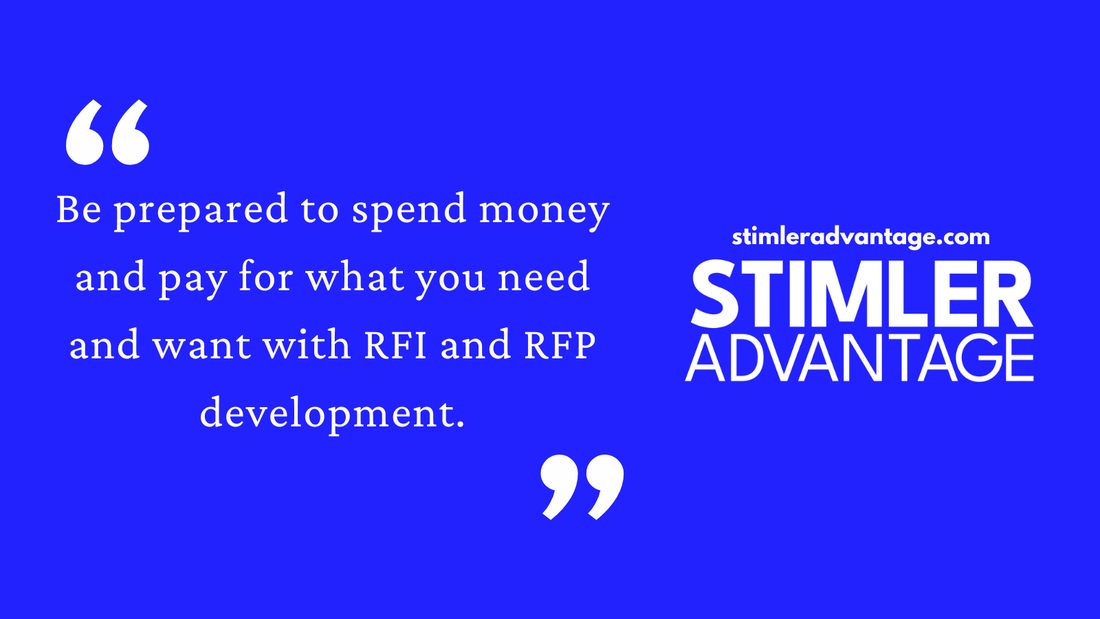
  2. Proactively Identify Internal and External Budgets and Resources: Conduct a thorough internal assessment to identify existing resources and budget constraints to determine the feasibility of your initiative before publishing an RFI or RFP. The core funding for your endeavor should come from earned revenue, research and development, and, most importantly, operational capacities for sustainability. Explore potential external funding sources, such as grants or partnerships, to augment your efforts, but do not rely on these funding sources to undertake or sustain your core initiative. Develop a realistic and sustainable budget that aligns with your project scope and timeline to ensure responsible financial management and avoid potential setbacks. Be explicit and transparent about your budget and funding status to potential solution providers in your documents so responses can be tailored to realistic budget requirements. Be prepared to spend money and pay for what you need and want. An underfunded budget for an RFI and RFP tells potential respondents that your project is not serious nor is it likely to succeed because your lack of investment means the initiative is clearly not a priority for the organization. 
  3. Provide Up-Front Detail in Objectives and Questions: Clearly articulate your project goals and desired outcomes to provide context for potential solution providers to help them tailor their proposals accordingly. Ask specific, targeted questions addressing your unique needs and challenges to avoid generic and boilerplate responses. Provide contextual and detailed background information or data that could inform solution provider understanding, more information is often better than less while maintaining security around proprietary and sensitive information.
  4. Develop Precise Evaluation Criteria and Matrices: Define clear and measurable criteria against which you will assess proposals and link these to your organization's objectives and key results (OKRs) and key performance indicators (KPIs) to ensure criteria that meet your organization's quarterly and dynamic strategic planning requirements. Weigh each criterion based on its importance to your project to prioritize critical factors and guide your decision-making. Develop a scoring matrix to facilitate consistent and transparent evaluation of each proposal.
  5. Set Aggressive and Determined Timelines: Establish realistic yet ambitious deadlines for each project stage. Communicate deadlines clearly to all stakeholders and hold them accountable for adherence. Push a sense of urgency and ensure efficient progress through robust digital project management task tracking and analytics. Strive to maintain a sense of momentum and avoid unnecessary delays. Be agile and open to reasonable points of flexibility while focusing on achieving your goals.

Here are some further considerations for RFI and RFP development:
  • Compliance Requirements: Ensure your RFI and RFP comply with relevant requirements and work with your licensed legal counsel to avoid complications and delays.
  • Demonstration and Test Environments: Be prepared to work with solution providers to develop demonstration and test environments to preview your data, content, and processes in their prospective platforms, tools, and workflows. Have assets and resources ready to go before your RFI and RFP development process to maximize efficiency and speed in your evaluation.
  • Market Research: Do your own market research internally to understand the competitive landscape and identify potential solution providers best aligned with your initiative and organization to reach qualified suppliers.
  • Negotiation Strategy: Before engaging with shortlisted solution providers, develop a clear negotiation strategy to empower your organization to secure the most favorable conditions, pricing, and terms.
  • Standardize Document and Procurement Processes: Develop standardized agreements, documents, and procurement processes for RFI and RPI initiatives, for consistency, to mitigate error and risk, and to streamline efforts.

Connect with me to discuss your executive management consulting needs.

How I Know What I Know and Do What I Do

2/19/2024


Introduction

I am often asked about my knowledge and skills as an executive management and information technology consultant. I have acquired my expertise through a variety of sources, including formal education, informal education, hands-on experience, professional forums, publications, and technology testing. I have unique and valuable skills and twenty years of work experience that can benefit you and your organization.

Formal Education

My formal education provided a solid foundation for my professional career. Throughout my high school and undergraduate academic career, I was a motivated and high-achieving student. I earned multiple merit-based scholarships, achieved perfect marks on occasion, and received top achievement awards in recognition of my academic work and intellectual leadership.

I excelled in several areas during my formal education, including critical and speed reading, public speaking, research, teaching, and writing. I served as a teaching assistant, supporting my fellow students through their coursework and delivering exams and lectures.

In formal learning environments, I was an innovator in cultivating my own learning. I took the initiative to learn the skills I needed and wanted, such as creating a thesis program in my university department. This experience also gave me the opportunity to develop my critical thinking and problem-solving skills.

My formal education at the university level was cross and interdisciplinary, spanning the arts, humanities, social sciences, and business. This provided me with a lifelong toolkit of skills that I continue to use in professional practice.

​Informal Education

In addition to my formal education, I have also gained a great deal of knowledge from informal sources, such as articles, audiovisual media, books, certifications, courses, training, site visits, and workshops. I am constantly engaged in developing my knowledge and skills, both hard and soft (e.g., domain and technical skills, and interpersonal and intrapersonal skills) on a wide range of topics that allow me to better serve my clients and constituents.

Some of my reading interests include: aesthetics, art history, business management, American and world history, military history, philosophy, poetry, and technology. I am a self-directed, habitual, and lifelong learner who challenges myself by learning holistically about a topic in order to gain a better understanding of it. I regularly earn industry certifications to demonstrate my achievement and proficiency in a particular topic or technology.

As the methods, techniques, and tools of informal learning continue to evolve, with even greater access and speed made possible by digital technologies, I strive to learn and apply as much as I can, and at a steady pace, in order to have a nimble and prepared mind.

In my professional career, I have also benefited from the support and guidance of mentors. I have also learned a great deal from my colleagues through peer-to-peer learning. I am able to identify and appreciate exceptional teams and colleagues. I am also familiar with the professional qualities I look for in clients and collaborators.

Throughout my career, I have taken a hands-on approach to learning. This has included site visits, secret shopper visits, training, workshops, and activities with experienced practitioners. While much of my work can be done most efficiently and effectively through digital means, I am willing to immerse myself in an environment to better understand the conditions and consider work goals. I am always looking for ways to improve my skills and knowledge so that I can be ready, relevant, and resonant. I am committed to lifelong learning and self-actualization.

Hands-On Experience

I have acquired a great deal of knowledge through hands-on experience. This has taught me how to build my abilities and apply my knowledge to real-world circumstances. I began working in office administrative support roles during my school years and had internships in my then-chosen field of art history and museums. These early experiences gave me insights into organizational operations and vocation-specific activities.  

I have learned the importance of clear, decisive, and visionary leadership, as well as the importance of an established chain of command to run an organization efficiently and effectively. This includes clearly defining roles and responsibilities. I continued to work part-time in museums throughout my college years while completing my studies, which was supplemented by international study and professional internships.

My formative years of professional experience took place at The Metropolitan Museum of Art in New York City, one of the world's great art and culture institutions. I began my career with two internships, which led to temporary and then full-time positions. I held seven different roles during my time at the museum.

As a then recent graduate, I was eager to learn and get involved. I took a hands-on approach to my work, learning by doing and improving my skills as I went. I was also open to new challenges and willing to do what was needed to support my colleagues and constituents. This experience helped me to understand the importance of earnest and forthright service, while also maintaining my own considered approaches and vision for achieving successful outcomes.

I used my adaptability and foresight to design processes and technological solutions that made my previous roles obsolete. This brought greater efficiency and reduced operational costs, and also enabled me to develop capabilities to support the institution in a changing, challenging, and dynamic environment impacted by difficult economic conditions and digital transformation.

In my roles, I often had to solve problems with limited resources, people, and time across the organization and with national and international partners. Therefore, working across different work approaches and contexts and resolutely harmonizing those to achieve successful outcomes was always a major priority. I learned how to solve tactical obstacles, while developing and building overall strategic capabilities.

After working for over a decade at The Metropolitan Museum of Art, my career expanded as a fellow and consultant. I have guided and supported organizations beyond the arts and culture sector, including a variety of educational, non-profit, for-profit, and government organizations.

My hands-on experience working with executive leaders and teams in these organizations has given me an in-depth understanding of working with tactical and strategic challenges, especially under difficult conditions of economic instability and multi-year public health, safety, and security crises. I focus on themes of digital transformation, fiscal management, relevance, resilience, sustainability, and visionary leadership.

Throughout my career, I have experienced human behavior in the face of the certain need for change that at times has been inspiring and refreshing when taking on my expert recommendations and having the courage, determination, and vision to move forward, face the day, and advance. 

My work products include internal documents, project plans, and technology systems implementations. I have also facilitated dynamic strategic planning listening sessions, budgets, collaboratively authored documents, objectives and key results, policies, and staffing and team plans. These efforts have helped organizations consider their current situation and chart a course for the future.

I continue to grow each day by learning and working with colleagues and clients. I am committed to empowering them and supporting their organizations to achieve redefined possibilities.

Professional Forums

From my time as a university student, I have participated in professional forums that align with my career goals. In these organizations, I have served in various capacities, including advisor, board member, communicator, juror, organizer, presenter, secretary, and reviewer.

Through my work with these forums, locally, nationally and internationally, I have gained exposure to a variety of perspectives on professional practice in the arts, business, culture, education, and technology. In my work hosting and facilitating professional forums, I have sought to advance professional practice by promoting proactive and forward-thinking approaches to supporting colleagues and peers, leaving them better equipped to adapt to change and overcome challenges.

My interest and engagement in professional forums is very much tied to their ability to support members business, economic, and professional skills interests. I am open and eager to participate in professional forums who are fiscally sound, delivering clear value, and fostering new business development opportunities for members online and on site.

Publications

Throughout my career, I have produced a variety of publications in different formats and media. These include articles, blog posts, book chapters, conference presentations, lectures, podcasts, reports, social media posts, videos, whitepapers, and websites. My work has been published in peer-reviewed scholarly journals, as well as collaborative and self-published projects. I have also contributed articles and posts to organization blogs, publications, and reports when the topic and audience are aligned with my professional practice.

The research, writing, and editing process of my publications has helped me to develop my critical thinking and communication skills. It has also given me the knowledge and perspectives I need to effectively support my clients and constituents. My goal with each publication project is to provide readers with direct, thoughtful, and valuable insights. I do this by reflecting on my research and considering the needs of my potential audience.

I am proud to see that my past writings have been cited in other publications over time. This indicates that my work has had an impact on the professional discourse in my field. I am always looking for new ways to share my knowledge and experience with others. I am excited to continue exploring new formats, mediums, and topics of publication that reflect my professional interests and that I believe will be of value to others.

Technology Reviewing and Testing

Technology reviewing and testing has been a valuable learning experience for me. I have served as an official beta tester for several notable digital technologies from leading global companies, as well as start-ups and crowdfunded projects. Over the years, I have developed an expertise in identifying threshold changes in technology that have the potential to spawn new innovations or create long-term impacts when integrated into business and culture. I am always testing new technology environments, software, and tools, and looking for ways to use technology to improve my work and support my constituents.

As a consultant, I regularly provide expert analysis and review of technology environments, hardware, and software for my clients. I help them identify the best tools to meet their needs, taking into account their budgets, processes, workflows, and most importantly, customer success. I approach the use of technology strategically, not just for the sake of technology. Sometimes, a less-is-more approach or a streamlined and adapted technology stack is preferable to adding a new application for every use case or developing a custom solution.

I review existing and new technology as a professional service to help existing and new players in the market place situate themselves and make needed enhancements and improvements. This has helped me to become more efficient and effective, and it has also allowed me to provide my clients with better service. By being a selective early and prudent adopter of certain technologies and technology environments, I have a technical knowledge that complements my business acumen and interdisciplinary expertise, thereby providing my constituents with multifaceted guidance. I also co-author and write publications about technology environments and products to share my experience and insights with the public.

Conclusion

I believe the best way to learn and perform work is through a combination of formal education, informal education, hands-on experience, professional forums, and technology testing. By drawing on all of these sources, I have developed a deep understanding of management and information technology consulting and the skills necessary to be successful in supporting my clients to achieve their goals.

This introduction provides an overview of my approaches and methodologies for how I acquire and apply my knowledge and skills. Choosing a contractor, consultant, or employee requires careful consideration. Understanding my approaches and skills in the pursuit of achievement and excellence for organizational outcomes can help you make the decision to work with me.

Please connect we me on the Stimler Advantage website and follow me and my company, Stimler Advantage, on LinkedIn. 

Welcome to the Stimler Advantage—Consulting that Empowers Leaders to Lead

3/24/2023

 
Picture
​Welcome to Stimler Advantage (SA), an executive management consulting firm. Supporting content, software, and strategy solutions, SA drives transformation through impactful solutions that empower dynamic, resilient, and sustainable organizations. SA empowers leaders to navigate complex organizational and digital challenges, providing expert guidance across business and technology services. The firm's President is Neal Stimler.

​What is the Stimler Advantage?

The Stimler Advantage is Neal Stimler, who brings visionary insights to your organization drawn upon a breadth and depth of interdisciplinary knowledge to provide critical solutions to your challenges. Neal's superpowers come from my critical and unique abilities as a digital and management practitioner, researcher, and strategist. Learn more about MY STORY.
​
Blue and white text graphic for referencing Stimler Advantage's business services
Business
Blue and white text graphic for referencing Stimler Advantage's strategy services
Strategy
Blue and white text graphic for referencing Stimler Advantage's technology services
Technology
SA offers expertise and time to support clients on business and technology areas described in my SERVICES, which include:

  • Board Development
  • Business Intelligence
  • Content Management
  • Enterprise Resource Planning
  • Licensing and Rights Management
  • Media Strategy and Planning
  • Open Access and Open Source
  • Partnerships
  • Project Management
  • Requests for Information and Proposals Development
  • Strategic Planning 

Consulting services informed by the Stimler Advantage 5 S's Framework of: 

  • Study
  • Survey
  • Scout
  • Situate
  • Start

Are you ready to drive you and your team forward? CONNECT with Neal to spur you and your an organization on to face change management and get on with the business that needs to be done for sustainability and success. 

Learn more by visiting SA's NAICS CODES and  RESOURCES. 

Connect With Me

Find updates from Stimler Advantage on LinkedIn in addition to this website. 

Categories

All
5 S's Framework
News
Services

    Author

    Neal Stimler is President of Stimler Advantage.

    Archives

    October 2025
    November 2024
    March 2024
    February 2024
    April 2023
    March 2023

    Categories

    All
    5 S's Framework
    News
    Services

SA logo

CONNECT

Services

NAICS CODES

LEGAL & POLICIES

Resources

Blog
© STIMLER ADVANTAGE LLC 2025.
​ALL RIGHTS RESERVED.
  • Home
  • Neal's Story
  • 5 S's Framework
  • Services
    • Service Scenarios
  • Certifications
  • NAICS CODES
  • Connect
  • Resources
    • Blog